
World Seagrass Day: Protecting seagrass, sustaining life
What is World Seagrass Day?
In May 2022, the United Nations General Assembly adopted Resolution A/76/L.56 and proclaimed 1 March as World Seagrass Day, acknowledging the urgent need to raise awareness about the importance of seagrasses as a fundamental component of global biodiversity.
This international observance highlights the critical role of seagrass ecosystems, draws attention to the increasing threats they face, and encourages coordinated efforts to conserve and restore these vital marine habitats.
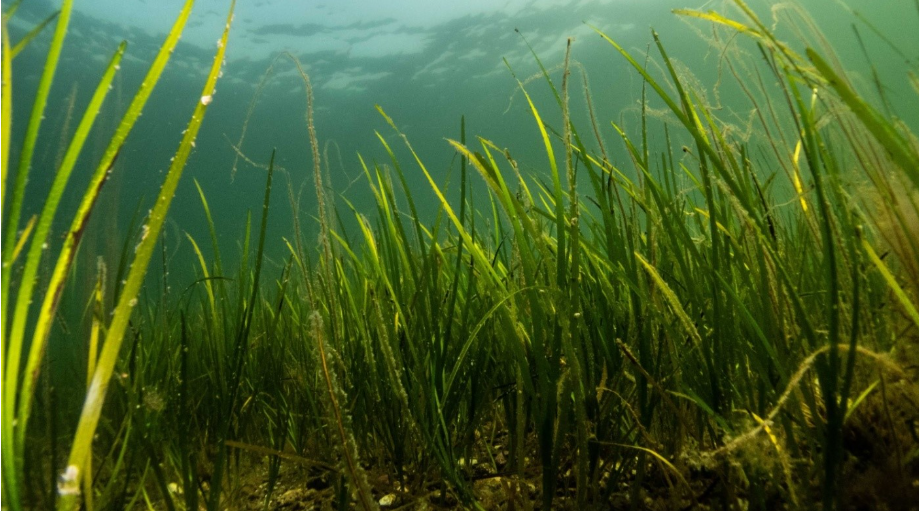
Seagrasses are unique marine flowering plants. Unlike seaweeds, they have true roots, stems, and leaves, and they reproduce through flowers and seeds. They grow in shallow coastal waters, forming dense underwater meadows found on six continents, from the tropics to near the Arctic circle.
Among the most widespread coastal habitats on Earth, seagrass meadows are essential to marine biodiversity, creating highly productive ecosystems that benefit both human and animal life.
The Critical Role of Seagrass Ecosystems
From the tropics to the Arctic circle, seagrasses are amongst the most widespread coastal habitats on the planet, existing in 159 countries. They are essential both for many migratory species protected under the Convention on Migratory Species (CMS) and for climate change mitigation.
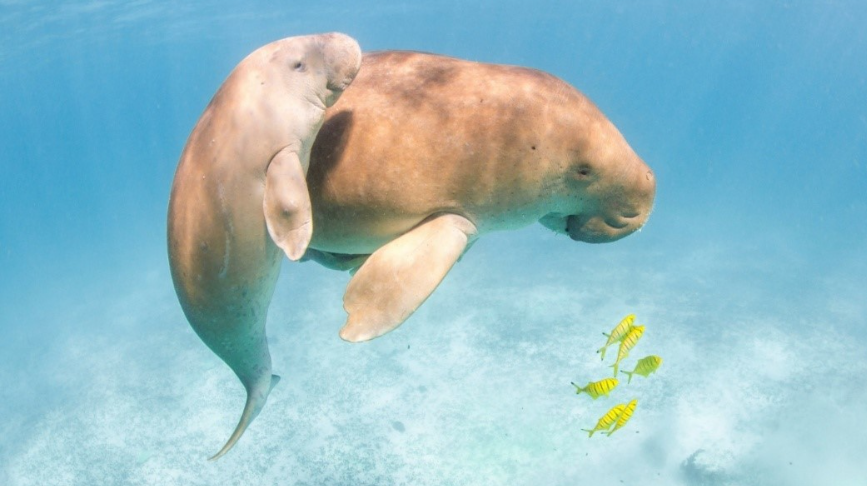
Most notably, seagrasses provide essential feeding grounds for dugongs (Dugong dugon), marine herbivores that depend almost exclusively on seagrass for their nutritional needs. Because dugongs frequently cross national borders to access these feeding areas, degradation or loss of seagrass meadows in one location can have wider regional impacts, affecting migratory connectivity, reproductive success, and the long-term viability of dugong populations.
Beyond dugongs, seagrass ecosystems support a diverse assemblage of migratory marine fauna, including sea turtles, fishes, and invertebrates, providing essential foraging, refuge, and nursery habitat throughout different stages of their life cycles.
Seagrass meadows provide shelter and nursery grounds for fish and invertebrates, protecting eggs, larvae and juveniles from predators and strong currents. A single acre of seagrass meadow can support up to 40,000 fish and 50 million small invertebrates. Without these nurseries, many species would struggle to reproduce, further accelerating global biodiversity loss.
Seagrasses also sustain vulnerable migratory species listed under CMS. In addition to being the exclusive primary food source of the dugong, they provide critical feeding, foraging, and resting habitat for nearly 60% of the world's sea turtle species during their migrations. Healthy seagrass meadows are therefore essential to the survival of these iconic marine animals.
Threatened Habitats
Unfortunately, these vital marine ecosystems are in danger. A combination of natural and human-induced threats such as destructive fishing practices, coastal development, nutrient run-off, pollution, invasive species, and climate change have led to a 29% loss in global seagrass meadows over the last century. But since 1990 the loss rate has become so important that the equivalent of two football fields of seagrass is vanishing every hour, making it among the most rapidly declining ecosystems on Earth.
These pressures are cumulative and often transboundary, requiring coordinated regional and global responses. Yet global monitoring remains limited, and measurable conservation targets are still emerging.
For more information, please visit this page: Threats to Seagrasses.
A Call to Action
On World Seagrass Day, governments, research institutions, regional bodies, and financial partners are encouraged to scale up coordinated action to protect and restore seagrass ecosystems. This includes:
Integrating seagrass into national biodiversity and climate strategies
Strengthening monitoring and data systems
Investing in science-based restoration initiatives
Supporting enabling policies and sustainable financing mechanisms
Protecting seagrass is not merely an environmental imperative, it is a strategic investment in food security, coastal protection, climate stability, and the survival of migratory species that depend on these vital underwater habitats.
For more information on seagrass, please visit this page: Seagrass.