
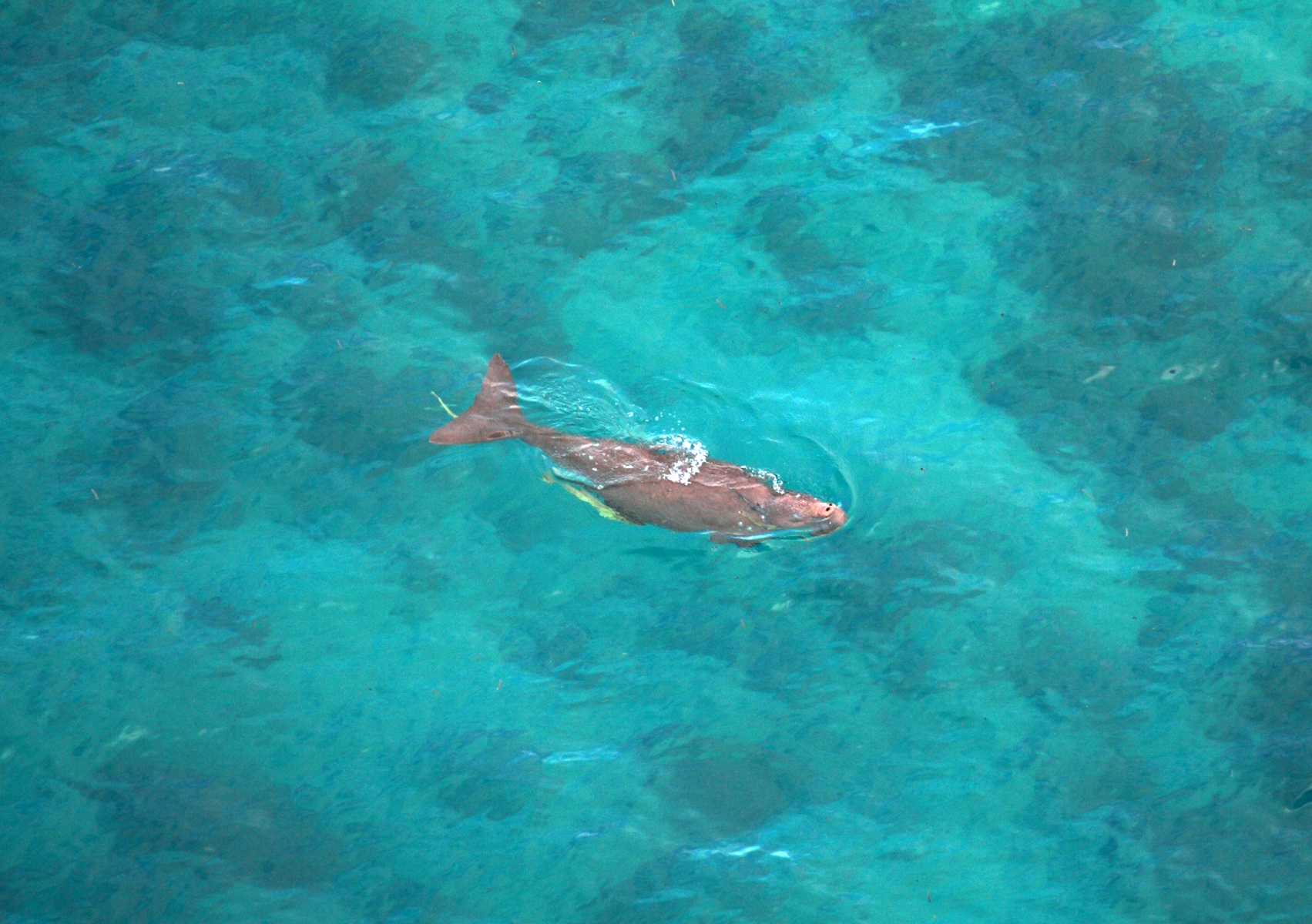
Thailand Hosts First International Conference on Dugong Conservation from Stranding to Captive Caring
Banner photo: © PL_MEtpison
Approximately 100 participants from Thailand and across the region gathered at the Dusit Thani Pattaya Hotel for the first International Coral Reef and Marine Life Conservation Conference (ICMC): Dugong Conservation from Stranding to Captive Caring, held from 1–3 December 2025.
The conference marked the inaugural event under the Princess Sirivannavari International Conservation Conference framework of the Marine Conservation Foundation: Coral Reefs and Marine Life of the Thai Seas, initiated by Her Royal Highness Princess Sirivannavari Nariratana Rajakanya. The Foundation was established to strengthen the conservation of Thailand’s coral reefs and marine ecosystems.
The event was co-hosted by the Memorandum of Understanding on the Conservation and Management of Dugongs and their Habitats throughout their Range (Dugong MoU) of the Convention on the Conservation of Migratory Species of Wild Animals (CMS), reflecting strong alignment between Thailand’s national conservation leadership and international migratory species frameworks. The conference also contributed to advancing the implementation of the CMS Dugong MOU, particularly in strengthening regional cooperation on stranding response and conservation planning.
The initiative is supported by a broad coalition of national partners, including the Royal Thai Navy, the Department of Marine and Coastal Resources (DMCR), the Department of Fisheries, the Department of National Parks, Wildlife and Plant Conservation, the Pollution Control Department, and Chulalongkorn University. Together, these partners are working to restore coral reefs and marine ecosystems, promote the sustainable use of marine resources, raise public awareness, and foster collaboration across government, academia, technical experts, and civil society.
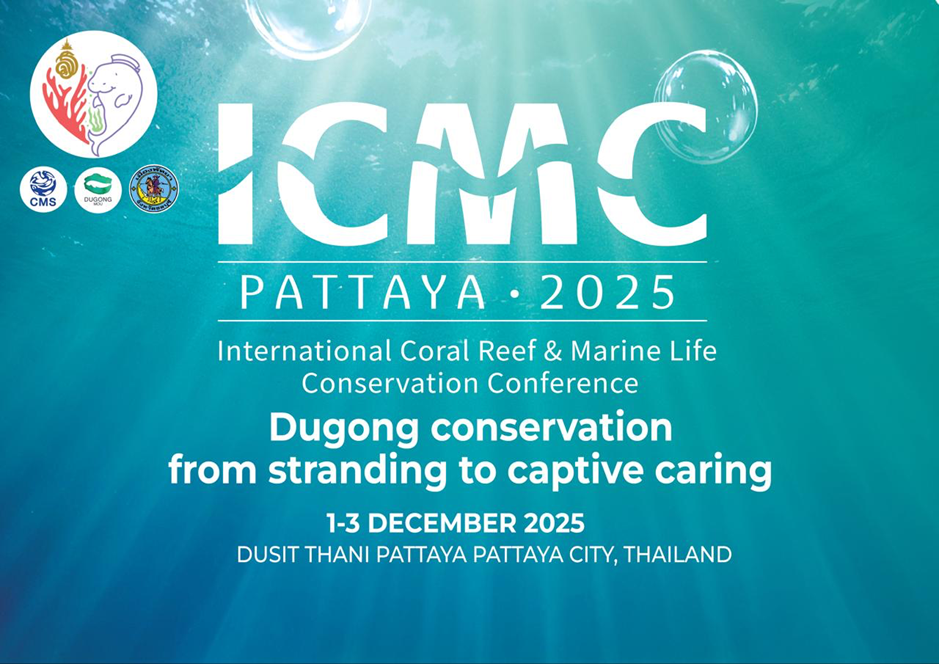
Conference poster for the First International Conference on Dugong Conservation:
From Stranding to Captive Caring, hosted in Thailand.
Focus on Dugongs: A Species at Risk
This year’s conference focused on dugongs (Dugong dugon), marine sirenians that depends on seagrass ecosystems and inhabit tropical and subtropical coastal waters. Dugongs are listed as Vulnerable on the International Union for Conservation of Nature (IUCN) Red List of Threatened Species, reflecting a high risk of extinction in the wild and an urgent need for conservation action
Globally, dugong populations are declining due to habitat destruction, entanglement in fishing gear, boat strikes, pollution, and the degradation of seagrass meadows linked to climate change. Strandings, resulting from disease, injury, harmful algal blooms or toxins, or human-related impacts, provide critical insights into population health and emerging threats. However, rescue and rehabilitation efforts often face limited research support, insufficient technical capacity, and funding constraints, particularly for surveillance and community-based monitoring systems.
Against this backdrop, the conference aimed to advance technical knowledge, strengthen collaboration among stakeholders, and improve practical approaches to dugong rescue, rehabilitation, and husbandry, with a focus on translating these efforts into tangible conservation outcomes
Opening Day: International Policy and Regional Experience
The conference officially opened on 1 December 2025 with a ceremony followed by keynote presentations addressing international cooperation and rescue networking.
Mr. Abdelmenam Mohamed, Programme Management Officer - CMS Dugong MOU, delivered a keynote on policies and international collaboration for dugong protection, highlighting the importance of aligning national efforts with regional and global conservation frameworks.
Dr. Lindsay Porter of the Asian Marine Mammal Stranding Network (AMMSN) presented on operationalizing a dugong rescue network, emphasizing coordinated response systems, standardized protocols, and regional data sharing.
Country reports from Thailand, the Philippines, Indonesia, Malaysia, Vietnam, and Japan followed, providing insights into national stranding trends and response experiences. The day concluded with technical sessions on rescue and conservation technologies presented by experts from Kyoto University and Thailand’s Department of Marine and Coastal Resources.
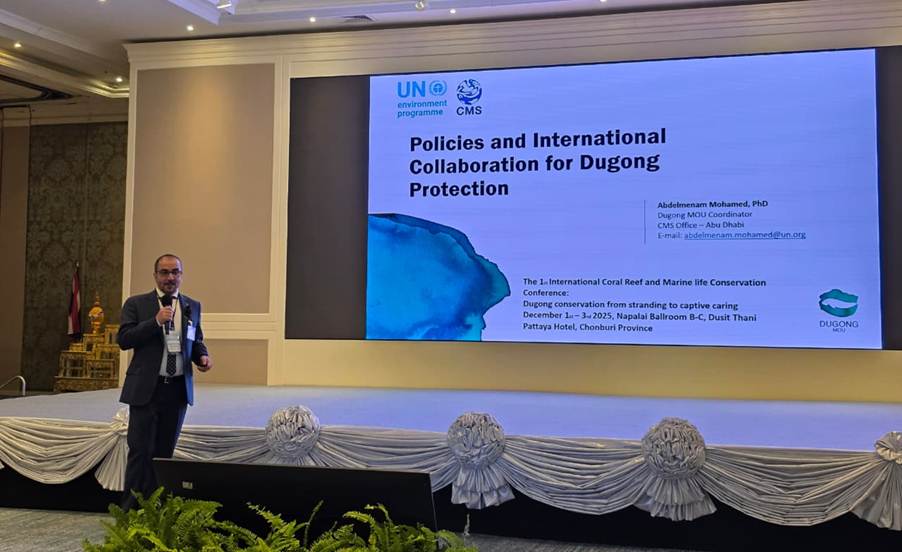
Mr. Abdelmenam Mohamed (CMS Dugong MOU) delivering a keynote on policy alignment
and international collaboration for dugong protection.
Advancing Veterinary Care and Husbandry
The second day focused on neonatal rescue, veterinary care, and facility design.
Dr. Paola Marron led discussions on neonatal dugong rescue and care, while Dr. Tres Clarke from Sea World Abu Dhabi presented on veterinary care for dugongs under human care. Participants stressed that clinical interventions should be integrated within broader conservation objectives, contributing to research, policy development, and improved survival outcomes.
A dedicated session on facility design explored how rehabilitation centers can be tailored to dugong biology and welfare. Key considerations included appropriate pool dimensions, water quality management, quiet zones, seagrass-based feeding strategies, quarantine capacity, and flexible spaces for medical procedures. Participants emphasized that such facilities should prioritize short-term rehabilitation, conservation research, and education, rather than long-term exhibition purposes.
Additional presentations from Toba Aquarium and SEA LIFE Sydney provided practical insights into husbandry approaches and the challenges associated with maintaining dugongs under human care.
Strengthening Dugong Rescue Networking
A central discussion on 3 December 2025 examined the establishment of a dedicated dugong network linked to existing regional stranding frameworks.
Participants identified four core pillars for such a network:
Research – Coordinated studies on strandings, mortality causes, and population dynamics.
Veterinary Medicine – Standardized clinical and pathology protocols.
Education and Communication – Translating science into effective outreach and policy messaging.
Capacity Building – Expanding technical expertise among responders, veterinarians, scientists, and volunteers.
Discussions highlighted the importance of strong collaboration among governments, NGOs, academic institutions, and coastal communities, supported by clear legal frameworks for dugong and habitat protection.
Agreed next steps included establishing an initial communication platform, encouraging thematic working groups (e.g., veterinary care, habitat protection, rescue operations, and policy and advocacy), and exploring the creation of a coordinating hub to facilitate information exchange and emergency response across countries.
A Milestone for Marine Conservation in Thailand
The ICMC represents an important milestone in strengthening collaboration between national institutions and international conservation mechanisms.
By bringing together policymakers, veterinarians, scientists, industry representatives, and community stakeholders, the conference underscored a shared commitment to improving dugong survival, from emergency stranding response to long-term conservation planning, while reinforcing the broader goal of protecting the seagrass ecosystems that sustain this iconic marine species.
The program concluded with a neonatal care and nutrition workshop, practical demonstrations, and a closing ceremony reaffirming participants’ commitment to regional cooperation and strengthened marine conservation action.