A Global Assessment of Dugong Status and Conservation Needs
The Convention on the Conservation of Migratory Species of Wild Animals (CMS) contracted James Cook University to prepare a new edition of the 2002 publication: ‘Dugong: status report and action pl
Executive Summary:
The Global Dugong Genetics Project aims to examine the phylogeography of the dugong based on historical samples from throughout the dugong’s range. It will update conservation and management actions through mapping the distribution of discrete dugong populations; identifying historical and potential migratory routes; and highlighting small populations as a priority for conservation. The Project was a collaboration between James Cook University and Nelson Mandela Metropolitan University.
Background:
From 2011–2013 genetic sampling took place and from 2013–2015 analysis was undertaken. To date, a total of 217 samples of dugongs held in European museum collections have been analysed to reveal the population genetic structure of the dugong throughout its range. The results will be disseminated in the form of a scientific paper that is currently pending publication.
The Secretariat would like to encourage the collection and stockpiling of genetic samples so that when financial and technical resources become available, a comprehensive analysis can be conducted. Stockpiling genetic samples is important to mitigate the issues associated with collecting contemporary samples due to the scarcity, low numbers, and relative inaccessibility of dugongs. Protocols for collecting genetic samples are available in the genetics advice from James Cook University. The CMS Dugong MOU Secretariat can assist in the coordination of stockpiling genetic samples upon request.
The Global Dugong Genetics Project aims to examine the phylogeography of the dugong based on historical samples from throughout the dugong’s range. It will update conservation and management actions through mapping the distribution of discrete dugong populations; identifying historical and potential migratory routes; and highlighting small populations as a priority for conservation. The Project was a collaboration between James Cook University and Nelson Mandela Metropolitan University.
Executive Summary:
The Dugong and Seagrass Research Toolkit is an initiative by TOTAL, Total Abu Al Bukhoosh, Environment Agency – Abu Dhabi and CMS Dugong MOU to provide an easily accessible online resource that incorporates decision-making for the selection of the most appropriate methodologies for studies of dugongs, seagrasses and the associated human communities.
Background:
The Dugong and Seagrass Research Toolkit has been developed to provide an easily accessible online resource that incorporates decision-making for the selection of the most appropriate methodologies for studies of dugongs, seagrasses and the associated human communities. The Dugong and Seagrass Research Toolkit is targeted for use by researchers, non-government/civil society managers and decision-makers in dugong Range States. Development of the Dugong and Seagrass Research Toolkit commenced in September 2015 and has been led by the Dugong Technical Group.
The Dugong and Seagrass Research Toolkit was launched at the Third Meeting of Signatories to the Dugong MOU in March 2017. A documentary about the Toolkit provides a useful overview of the why the Toolkit is making a significant contribution to dugong and seagrass conservation.
The Dugong and Seagrass Research Toolkit is available online at www.conservation.tools.
The Dugong and Seagrass Research Toolkit is an initiative by TOTAL, Total Abu Al Bukhoosh, Environment Agency – Abu Dhabi and CMS Dugong MOU to provide an easily accessible online resource that incorporates decision-making for the selection of the most appropriate methodologies for studies of dugongs, seagrasses and the associated human communities.
The Toolkit will show you which techniques are the most effective and efficient for your team capacity, budget and timeline to answer research questions about dugongs, seagrasses and the human communities that depend on them. The Dugong and Seagrass Research Toolkit is targeted for use by researchers, non-government/civil society managers and decision-makers in dugong Range States.
2016/022: Third Meeting of Signatories (MOS3) to the Dugong MOU
The Secretariat of the CMS Memorandum of Understanding on the Conservation and Management of Dugongs and their Habitats throughout their Range (Dugong MOU) is pleased to announce that the Third Mee
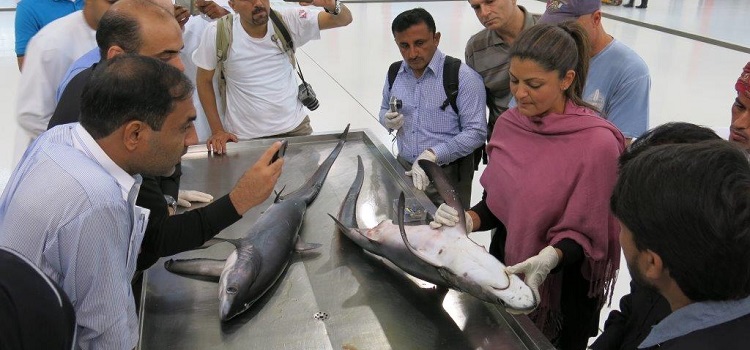
Capacity-building Workshop on Bycatch Held in Oman
A capacity building workshop to support the implementation of the Regional Observer Scheme of the Indian Ocean Tuna Commission (IOTC) was organized by the IOTC Secretariat in cooperation with the C
Executive Summary
The Dugong MOU Secretariat provided funding to enable a partnership with the Marine Research Foundation and a team of global experts to develop and implement a Questionnaire which could be implemented at low cost across large geographical areas, and that generates standardised data sets. The Questionnaire was designed to collect data on dugongs, as well as marine turtles and cetaceans, and has resulted in a large data set of dugong numbers and distribution across a significant portion of the dugong’s geographic range.
Background
The Questionnaire was initially deployed in 18 countries spanning four key geographic areas (East Africa, South Asia, Southeast Asia and the Southwestern Pacific) with 6153 respondents. The results of the Questionnaires provide the latest information on the distribution and abundance of dugong populations in these areas, while identifying and mapping areas of important dugong habitats such as seagrass beds, and assessing the relative risks to distinct populations from fisheries.
The Questionnaire has also been used to gather more information on dugong distribution, trends and threats in Egypt (200 respondents), Indonesia (124), Malaysia (900), Mozambique (184), the Solomon Islands (32) and Vanuatu (217) – a total of 7810 respondents to date. The flexibility and low cost of implementing the Questionnaire means that countries can rapidly assimilate a snapshot of the distribution of dugongs and fishery overlaps, and identify hotspot areas where conservation action might be needed.
Using the Questionnaire
The Questionnaire consists of the following documents which can be found below under ‘other documents’:
- Project Manual (2012)
- Questionnaire (2016)
- Short Questionnaire (2016)
- Data Upload Sheet (2017)
The Project Manual provides detailed instructions on using the Questionnaire. The manual provides background information as well as guidance on interview survey design, field data collection and control and how to upload graphics and spatial data. It is recommend that researchers read the manual before designing a research programme using the Questionnaire.
The Questionnaire was updated in early 2016 and consists of 106 questions covering interviewee background, dugong catch/bycatch, perceptions, fishery information, sea turtle catch/bycatch, and dolphin catch/bycatch.
The short version of the Questionnaire is designed for use in follow up interviews, once the original Questionnaire has been completed. The short Questionnaire consists of ten questions.
The Data Upload Sheet was updated in late 2017. By following the instructions in the excel spreadsheet and the Project Manual, users can upload the data from their completed Questionnaires into the spreadsheet. The spreadsheet will then produce a number of charts that depict the results of the Questionnaires.
Reports
In January 2017 the CMS Dugong MOU Standardised Dugong Catch and Bycatch Questionnaire Final Report was released. The report provides background information on the development of the Questionnaire, how it was implemented as well as a regional analysis of the results of the Questionnaire. This project provides information on dugong numbers, trends in captures and evidence of fisher-dugong interactions for a large part of the dugong’s range that was previously unavailable, and provides a stepping-stone to more focused research in the areas where dugongs were found to exist and where fishery pressures were high.
In December 2017, a paper on the project was published in PLOS one titled A low-cost solution for documenting distribution and abundance of endangered marine fauna and impacts from fisheries.
The Dugong MOU Secretariat provided funding to enable a partnership with the Marine Research Foundation and a team of global experts to develop and implement a Questionnaire which could be implemented at low cost across large geographical areas, and that generates standardised data sets. The Questionnaire was designed to collect data on dugongs, as well as marine turtles and cetaceans, and has resulted in a large data set of dugong numbers and distribution across a significant portion of the dugong’s geographic range.
The information collected by the surveys can assist in determining the distribution and abundance of dugong populations, help identify and map areas of important dugong habitat such as sea grass beds, and assess the risk of, and develop measures to mitigate degradation of dugong populations and their habitats. The standardised survey protocol can also be of great benefit for comparisons within and across regions.
The objective is to create an alternative and cost-effective approach to interview fishers to help identify dugong trouble spots where there are any low number of dugongs. Identifying any areas where dugongs are likely to be killed by hunting capture or vessel strikes. The standardised, culturally-appropriate surveys can be done quickly, efficiently and cost effectively.
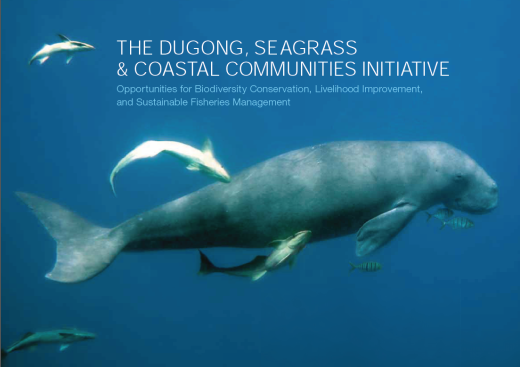
Dugong, Seagrass and Coastal Communities Initiative
The Dugong, Seagrass and Coastal Communities Initiative encompasses complementary activities to support the conservation of dugongs and their seagrass habitats throughout the over 40 Range Sta
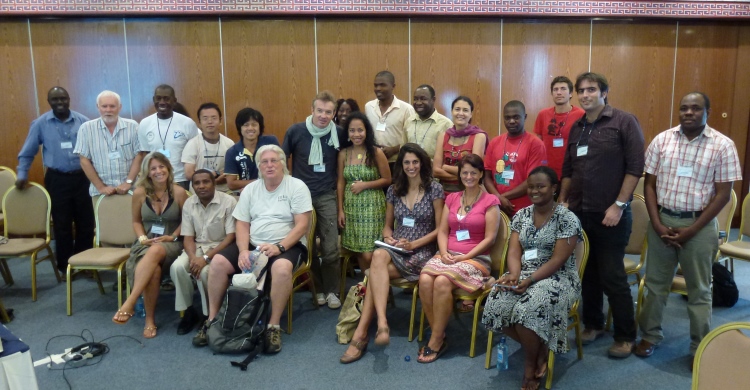
Dugong Session at the WIOMSA Symposium